
EMT practice scenarios, often in PDF format, are vital for effective training, seamlessly connecting theoretical knowledge with practical application in emergency medical services.
What are EMT Practice Scenarios?
EMT practice scenarios are meticulously designed simulations of real-world emergency situations, serving as indispensable tools for honing the skills of emergency medical technicians. These scenarios, frequently distributed as downloadable PDF guides, present realistic challenges that demand quick thinking and decisive action. They aren’t simply textbook exercises; they actively engage trainees in the complexities of patient assessment, critical thinking, and effective decision-making.
Essentially, these scenarios bridge the gap between theoretical knowledge and practical application, allowing EMTs to experience the pressure and unpredictability of fieldwork in a safe, controlled environment. They replicate the dynamic nature of emergencies, forcing practitioners to adapt and respond appropriately. The scenarios cover a broad spectrum of medical and trauma events, preparing students for diverse situations they may encounter.
The Importance of Realistic Training
Realistic training is paramount for EMTs, as their initial actions significantly impact patient survival and recovery. EMT medical scenarios, often accessed as PDF documents, are specifically crafted to mirror the unpredictability and urgency inherent in real emergencies. This allows practitioners to experience the pressure and complexity of fieldwork without jeopardizing actual patient safety.
The value lies in replicating the chaotic environment of an emergency scene, forcing trainees to prioritize tasks, manage limited resources, and communicate effectively under stress. Such immersive experiences build confidence and refine skills, ensuring EMTs are well-prepared to handle critical situations. Realistic scenarios cultivate competence and improve patient outcomes, solidifying the crucial role of preparation.
Benefits of Using PDF Format
Utilizing PDF format for EMT practice scenarios offers numerous advantages for both instructors and trainees. PDFs ensure consistent presentation across various devices, maintaining scenario integrity regardless of the user’s operating system or software. Downloadable PDF guides provide convenient offline access, enabling study and review anytime, anywhere – crucial for busy schedules.
Furthermore, PDFs are easily shareable and printable, facilitating collaborative learning and allowing for annotated versions for personalized study. The format supports detailed patient assessments, management questions, and treatment protocols within each scenario. This accessibility and portability make PDFs an ideal medium for delivering comprehensive and readily available training materials to aspiring EMTs.
Core Components of EMT Scenarios
Effective EMT scenarios integrate patient assessment, scene safety, and understanding the mechanism of injury or nature of illness for realistic training.
Patient Assessment Sections
Patient assessment is a cornerstone of any effective EMT scenario, demanding a systematic approach to gather crucial information. These sections within PDF scenarios typically begin with an initial assessment, focusing on the patient’s level of consciousness and airway, breathing, and circulation (ABCs). Detailed patient histories, including medical conditions, allergies, medications, and the events leading to the current situation, are essential components;
Scenarios should prompt EMTs to perform focused physical exams, evaluating vital signs like pulse, respiration rate, blood pressure, and temperature. Furthermore, they should encourage detailed questioning to uncover pertinent information, and the ability to adapt questioning based on patient responses is key. The assessment sections should also include documentation requirements, mirroring real-world protocols, and emphasize the importance of accurate and concise record-keeping throughout the entire process.
Scene Size-Up and Safety Considerations
EMT practice scenarios, particularly those in PDF format, heavily emphasize the critical importance of a thorough scene size-up. This initial phase requires EMTs to assess the environment for potential hazards – traffic, unstable structures, hazardous materials, or violent individuals – before approaching the patient. Safety considerations are paramount; scenarios should prompt the use of appropriate personal protective equipment (PPE), like gloves, masks, and eye protection.
Effective scene control is also vital, including isolating the area, directing bystanders, and requesting additional resources if needed. Scenarios should challenge EMTs to identify and mitigate risks, ensuring their own safety and the safety of their partner, the patient, and any bystanders. Recognizing the mechanism of injury or nature of illness (MOI/NOI) during this phase is crucial for anticipating potential injuries and preparing for appropriate treatment.
Mechanism of Injury/Nature of Illness (MOI/NOI)
EMT practice scenarios, frequently delivered as PDF guides, place significant emphasis on accurately determining the Mechanism of Injury (MOI) or Nature of Illness (NOI). The MOI describes how the injury occurred – for example, a motor vehicle collision or a fall – while the NOI explains the underlying medical condition causing the patient’s symptoms, such as a heart attack or stroke.
Understanding the MOI/NOI helps EMTs anticipate potential internal injuries and prioritize assessment. Scenarios should challenge students to deduce the likely injuries based on the scene presentation and patient’s condition. This includes considering factors like the speed of impact in a crash, the height of a fall, or the patient’s medical history. Accurate MOI/NOI determination directly influences treatment decisions and patient outcomes, making it a cornerstone of effective prehospital care.

Common EMT Scenario Categories
EMT PDF scenarios commonly cover respiratory, cardiovascular, and trauma emergencies, providing realistic simulations for diverse situations and honing critical decision-making skills.
Respiratory Emergency Scenarios
EMT practice PDFs frequently feature respiratory emergencies, crucial for developing rapid assessment and intervention skills. These scenarios encompass a wide range of conditions, including Congestive Heart Failure (CHF), demanding careful attention to pulmonary edema and oxygen administration techniques. Foreign Body Airway Obstruction (FBAO) scenarios emphasize the Heimlich maneuver and airway management protocols, vital for immediate life-saving actions.
Furthermore, Pneumonia and Respiratory Distress scenarios challenge EMTs to differentiate between various respiratory illnesses, assess breathing effort, and provide appropriate oxygen therapy and ventilatory support. Detailed patient assessments, management questions, and treatment protocols within these PDF guides reinforce the importance of quick thinking and effective communication in high-pressure situations, ultimately enhancing preparedness for real-world respiratory emergencies.
Congestive Heart Failure (CHF) Scenarios
EMT PDF practice scenarios focusing on Congestive Heart Failure (CHF) are designed to simulate patients presenting with shortness of breath, edema, and potential respiratory distress. These simulations require EMTs to accurately assess vital signs, auscultate lung sounds for crackles, and determine the patient’s oxygen saturation levels.

Effective management within these scenarios involves administering supplemental oxygen, positioning the patient for optimal breathing, and recognizing signs of worsening condition. PDF guides detail patient histories, medication lists, and potential complications, prompting critical thinking regarding appropriate interventions and transport decisions. The emphasis is on recognizing the urgency of CHF exacerbations and providing timely, supportive care while awaiting advanced medical intervention.
Foreign Body Airway Obstruction (FBAO) Scenarios
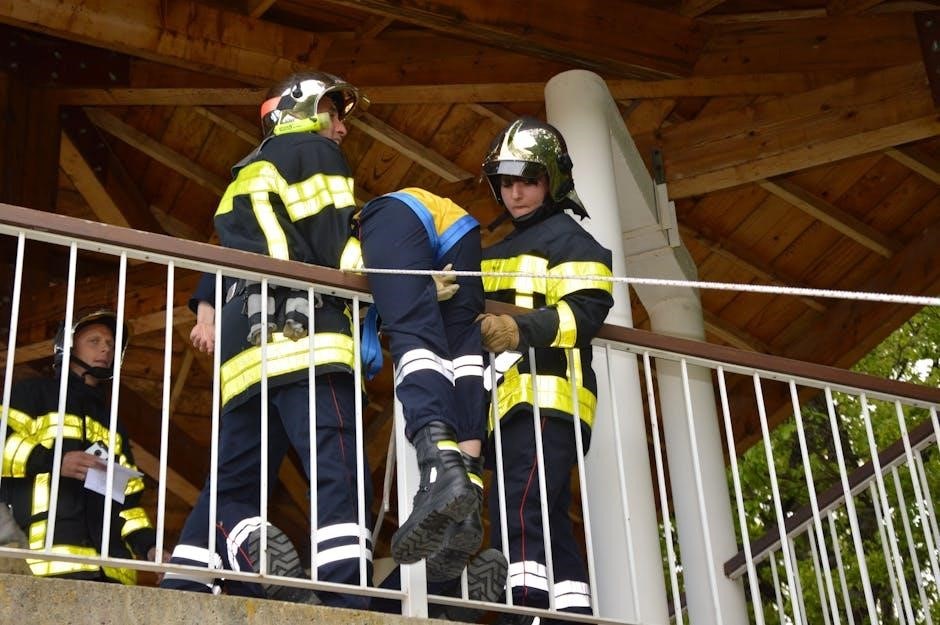
EMT PDF practice scenarios centered around Foreign Body Airway Obstruction (FBAO) challenge responders to quickly identify and manage patients experiencing complete or partial airway blockage. These simulations emphasize the importance of differentiating between mild and severe obstruction, utilizing appropriate interventions like back blows and abdominal thrusts (Heimlich maneuver).
PDF guides present varying patient presentations – conscious, altered mental status, or unresponsive – requiring EMTs to adapt their approach accordingly. Scenarios often include considerations for pediatric and geriatric patients, where technique modifications are crucial. Successful completion demands proficiency in airway management techniques and a clear understanding of when to escalate care, including potential surgical airway considerations.
Pneumonia and Respiratory Distress Scenarios
EMT PDF practice scenarios focusing on Pneumonia and broader Respiratory Distress require assessment of patients exhibiting varying degrees of difficulty breathing. These simulations emphasize recognizing signs like increased respiratory rate, use of accessory muscles, altered mental status, and abnormal lung sounds – wheezes, crackles, or diminished breath sounds.
PDF guides detail patient histories suggesting potential causes, from infectious pneumonia to chronic obstructive pulmonary disease (COPD) exacerbations. EMTs practice oxygen administration techniques, assisting with ventilations if needed, and monitoring vital signs closely. Scenarios often challenge responders to differentiate between cardiac and respiratory causes of distress, guiding appropriate treatment and transport decisions.
Cardiovascular Emergency Scenarios
Cardiovascular emergency EMT practice scenarios, frequently found within PDF training materials, are crucial for developing rapid assessment and intervention skills. These simulations cover a spectrum of conditions, demanding proficiency in recognizing signs and symptoms of life-threatening events. EMTs practice evaluating patients presenting with chest pain, palpitations, or signs of shock, utilizing techniques like vital sign monitoring and ECG interpretation (if trained).
PDF guides present realistic patient histories and evolving clinical pictures, forcing trainees to adapt their approach. Scenarios emphasize the importance of timely oxygen administration, establishing IV access, and preparing for potential advanced life support interventions. Effective PDF resources will also include detailed debriefing notes for instructors.
Chest Pain and Myocardial Infarction (MI) Scenarios
Chest pain and suspected Myocardial Infarction (MI) scenarios within EMT practice PDFs are designed to hone critical thinking and rapid decision-making skills. These simulations present patients with varying presentations – from classic crushing chest pain to atypical symptoms like shortness of breath or jaw discomfort. Trainees practice obtaining a thorough patient history, including risk factors and medication lists, while simultaneously monitoring vital signs.
PDF resources often include evolving scenarios, mirroring the dynamic nature of an MI. EMTs learn to recognize ECG changes (if certified), administer oxygen, assist with aspirin administration (per protocol), and prepare for transport. Effective scenarios emphasize the importance of early recognition and prompt intervention to minimize cardiac damage, and detailed debriefing points are included.
Stroke Recognition and Management Scenarios
Stroke recognition and management scenarios, commonly found in EMT practice PDFs, focus on rapidly identifying neurological deficits and initiating appropriate prehospital care. These simulations challenge EMTs to utilize tools like the Cincinnati Prehospital Stroke Scale (CPSS) or the Los Angeles Motor Scale (LAMS) to assess patients exhibiting signs of a potential stroke – facial droop, arm drift, and speech abnormalities.
PDF resources detail scenarios with varying stroke types (ischemic vs. hemorrhagic) and timeframes since symptom onset, emphasizing the critical importance of “time is brain.” Trainees practice gathering a detailed patient history, including last known well time, and communicating effectively with hospital personnel. Scenarios reinforce the need for rapid transport to a stroke center and accurate documentation.
Trauma Scenarios
Trauma scenarios within EMT practice PDFs are designed to test a provider’s ability to manage life-threatening injuries resulting from physical force. These simulations cover a broad spectrum of incidents, demanding rapid assessment and intervention skills. Common themes include controlling hemorrhage, maintaining airway patency, and immobilizing suspected fractures.
PDF resources present realistic situations like motor vehicle accidents (MVAs), falls, and penetrating trauma, requiring EMTs to prioritize interventions based on the patient’s condition. Scenarios emphasize the importance of scene safety, proper spinal motion restriction, and efficient packaging for transport. They also reinforce the use of trauma assessments, like the mechanism of injury (MOI) to anticipate potential injuries.
Motor Vehicle Accidents (MVAs)
MVA EMT practice scenarios, frequently found in PDF training materials, are crucial for preparing providers for one of the most common emergency calls. These simulations challenge EMTs to rapidly assess a scene, identify hazards, and manage multiple patients potentially suffering from a wide range of injuries. Emphasis is placed on vehicle extrication considerations and spinal immobilization techniques.
PDF-based MVA scenarios often detail the vehicle’s damage, the position of patients, and vital signs, prompting EMTs to formulate a treatment plan. They reinforce the importance of a thorough patient assessment, including identifying life-threatening conditions like airway obstruction, hemorrhage, and tension pneumothorax. Realistic scenarios also incorporate bystander reports and the need for effective communication with dispatch and other responders.
Falls and Blunt Trauma Scenarios
Falls and blunt trauma EMT practice scenarios, commonly available as downloadable PDF guides, prepare providers for managing injuries resulting from these frequent incidents. These simulations emphasize assessing the mechanism of injury – the height of the fall, the landing surface, and the patient’s physical condition – to anticipate potential internal damage. EMTs learn to prioritize assessment based on the likelihood of serious injury.
PDF-based scenarios detail patient presentations, ranging from minor abrasions to severe fractures and head trauma. They reinforce the importance of spinal immobilization, particularly in geriatric patients who are more susceptible to vertebral fractures. Realistic simulations also incorporate challenges like altered mental status and difficulty obtaining a patient history, requiring EMTs to utilize observational skills and deductive reasoning.

Utilizing EMT Scenario PDFs Effectively
PDF EMT scenarios maximize learning through preparation, immersive role-playing, and thorough debriefing—critical components for skill development and real-world readiness.
Pre-Scenario Preparation
Effective utilization of EMT scenario PDFs begins with diligent pre-scenario preparation. Before engaging in any simulation, thoroughly review the entire scenario document, paying close attention to the patient’s history, presenting complaints, and vital signs. Understand the expected patient responses and how they might evolve during the assessment.
Familiarize yourself with the environment described in the scenario – is it a roadside accident, a domestic setting, or a public space? This contextual awareness is crucial. The patient, if applicable, should also review their role and script, ensuring they can accurately portray the assigned condition. Avoid simply reading responses; aim to embody the patient’s emotional and physical state.
Gather all necessary equipment and ensure it’s in working order. Mentally rehearse the steps of a patient assessment, anticipating potential challenges and formulating a plan of action. This proactive approach maximizes learning and ensures a smooth, realistic simulation experience.
Role-Playing and Simulation Tips
When utilizing EMT scenario PDFs, immersive role-playing is paramount. For EMTs, maintain professional demeanor, clear communication, and adherence to protocols, even under simulated pressure. Practice active listening and adapt your approach based on patient responses. Remember, the goal isn’t just to arrive at the correct diagnosis, but to demonstrate effective patient care.
Patients should fully commit to their assigned roles, responding authentically to questions and following the provided script. Avoid giving leading information; allow the EMT to gather information through assessment. Embrace the unexpected – scenarios often deviate from the planned course, mirroring real-world emergencies.
Instructors should foster a safe learning environment, providing constructive feedback and encouraging critical thinking. Focus on both technical skills and interpersonal communication. Debriefing after each scenario is essential for reinforcing learning and identifying areas for improvement.

Debriefing and Scenario Analysis
Post-scenario debriefing is a crucial component when utilizing EMT scenario PDFs. A thorough discussion should begin with individual EMT self-reflection: what went well, what could be improved, and what challenges were encountered? Encourage open communication and a non-judgmental atmosphere.
The instructor should then lead a group analysis, focusing on adherence to protocols, decision-making processes, and communication effectiveness. Review the scenario’s objectives and assess whether they were met. Analyze any deviations from the expected course and discuss alternative approaches.
Consider the patient’s perspective – how did the care feel from their point of view? This fosters empathy and patient-centered care. Finally, document key learnings and identify areas for future training, ensuring continuous improvement in emergency response capabilities.

Advanced Scenario Considerations
EMT scenario PDFs can evolve to include complex situations like multi-patient incidents, pediatric emergencies, and unique geriatric patient presentations for realism.

Multi-Patient Incident (MPI) Scenarios
EMT practice PDFs simulating Multi-Patient Incidents (MPIs) are crucial for developing triage and resource management skills. These scenarios challenge EMTs to rapidly assess numerous patients, categorize them based on injury severity using START triage or similar systems, and effectively communicate needs to dispatch and incoming resources.
MPI PDFs should present varying degrees of injuries and complexities, forcing EMTs to prioritize care under pressure. Realistic elements include limited resources, evolving scene conditions, and the need for constant reassessment. Effective MPI training emphasizes clear communication, delegation of tasks, and maintaining situational awareness amidst chaos.
These scenarios prepare EMTs for large-scale emergencies like mass casualty events, ensuring they can contribute to organized and efficient patient care, ultimately maximizing survival rates in overwhelming situations. Practicing with these PDF guides builds confidence and competence.
Pediatric Emergency Scenarios
EMT practice PDFs focusing on pediatric emergencies are essential, as children present unique physiological and psychological challenges. These scenarios require EMTs to adapt assessment and treatment techniques based on age and developmental stage, considering factors like airway size and fluid volume.
Effective pediatric PDF scenarios cover common emergencies like febrile seizures, respiratory distress (croup, bronchiolitis), allergic reactions, and traumatic injuries. They emphasize the importance of parental reassurance and involving family members in care whenever possible. Dosage calculations for medications are also critical components.
Realistic simulations should incorporate age-appropriate communication strategies and address the emotional needs of both the child and their caregivers. Mastering these skills through PDF practice builds confidence and improves outcomes in pediatric emergencies.
Geriatric Emergency Scenarios
EMT practice PDFs dedicated to geriatric emergencies are crucial, given the increasing aging population and their unique healthcare needs. Older adults often present with atypical symptoms, multiple comorbidities, and altered physiological responses to illness and injury, demanding specialized assessment skills.
These scenarios should cover common geriatric emergencies like falls, altered mental status, chest pain, stroke, and medication-related issues. PDF guides must emphasize careful medication reconciliation and consideration of pre-existing conditions. Recognizing signs of elder abuse or neglect is also vital.

Effective simulations require EMTs to practice patience, clear communication, and sensitivity to the emotional and cognitive challenges faced by older patients. Mastering these skills through PDF practice enhances care and improves outcomes.