Masterbuilt Butterball Electric Turkey Fryer Manual: A Comprehensive Guide
This manual provides essential guidance for safely and effectively using your Masterbuilt Butterball electric turkey fryer, covering models like 23011014 and 23011114.
Welcome to the world of deliciously fried turkey! This Masterbuilt Butterball electric fryer offers a safer and more convenient alternative to traditional propane fryers. Designed for indoor or outdoor use, it allows you to achieve perfectly cooked, crispy-skinned turkey with ease. This manual serves as your comprehensive guide, covering everything from initial setup and safety precautions to detailed frying instructions and post-frying cleanup.
Models like the 23011014 and 23011114 are capable of handling turkeys up to 22 lbs (9.98 kgs), ensuring a flavorful centerpiece for your gatherings. Remember to always prioritize safety and follow the guidelines outlined within this manual for a successful and enjoyable frying experience. Ordering Butterball seasoning kits is available at 1-800-489-1581.
Understanding Your Fryer Model Number (e.g., 23011014, 23011114)
Your Masterbuilt Butterball electric turkey fryer’s model number is crucial for accessing specific support and replacement parts. Common models include 23011014 and 23011114, but variations exist. Locate the model number on the unit’s data plate, typically found on the bottom or back of the fryer.
This number identifies the specific features and specifications of your appliance. When contacting Masterbuilt customer service or ordering replacement components, having the model number readily available ensures you receive the correct assistance. Referencing the model number in your manual searches online will also provide tailored information. Always keep this number for future reference and maintenance needs;
Safety First: Important Precautions
Prioritizing safety is paramount when operating your Masterbuilt Butterball electric turkey fryer. Always ensure the unit is on a stable, level, non-combustible surface outdoors, away from structures and flammable materials. Never leave the fryer unattended during operation. Use extreme caution when handling hot oil, as severe burns can occur.
Keep children and pets away from the fryer at all times. Do not exceed the maximum oil or turkey weight limits (22 lbs/9.98 kgs). Ensure the turkey is completely thawed before frying. Always follow electrical safety guidelines, avoiding use in wet conditions. Disconnect the fryer when not in use and allow it to cool completely before cleaning.
General Safety Guidelines
Before operating your Masterbuilt Butterball fryer, thoroughly read this manual. Inspect the unit for any damage before each use; do not operate if damaged. Ensure proper ventilation and maintain a safe distance from surrounding objects. Never move the fryer while it contains hot oil. Use appropriate heat-resistant gloves and eye protection during operation.
Avoid dropping items into the hot oil. Be mindful of the hot surface and potential splatter. Do not overfill the fryer with oil. Always use a properly grounded electrical outlet. Supervise the frying process continuously. If the unit malfunctions, disconnect it immediately and contact Masterbuilt for assistance.
Electrical Safety Instructions
Always ensure the fryer is properly grounded to prevent electric shock. Never operate the unit with a damaged cord or plug. Do not use an extension cord; plug directly into a grounded outlet. Avoid operating the fryer outdoors or in wet conditions. Keep the electrical components dry and away from water sources.
Disconnect the fryer from the power source before cleaning or performing maintenance. Do not immerse the fryer base in water or any other liquid. If the fryer experiences an electrical malfunction, immediately disconnect it and contact a qualified technician. Never attempt to repair the unit yourself.
Oil Safety and Handling
Hot oil poses a significant burn risk; exercise extreme caution. Never leave the fryer unattended while in operation. Ensure the turkey is completely thawed before frying to prevent dangerous oil splatter. Use only recommended cooking oils, such as peanut, canola, or vegetable oil.
Carefully monitor the oil temperature and avoid overheating. Never overfill the fryer with oil, as this can cause overflow during turkey insertion. Dispose of used oil responsibly; do not pour it down the drain. Allow the oil to cool completely before handling or storing. Keep flammable materials away from the fryer during operation.

Preparing for Your First Fry
Before your initial use, thoroughly unpack all components and verify everything is present. Proper assembly and oil selection are crucial for a successful fry.
Unboxing and Component Checklist
Carefully unpack your Masterbuilt Butterball Electric Turkey Fryer and verify all components are included. The fryer should contain the pot, lid, basket, thermometer, power cord, and potentially a wood chip tray. Inspect each part for any shipping damage before proceeding. Ensure the heating element within the pot is securely attached and free from defects.
Refer to the included parts diagram in your manual to confirm you have everything necessary. Missing components should be reported to Masterbuilt customer support immediately. Retain the original packaging for potential returns or warranty claims. A properly inventoried unboxing ensures a smooth and safe frying experience, preventing delays and potential hazards later on.
Assembling the Turkey Fryer
Begin assembly by placing the fryer pot securely on a flat, stable, and non-combustible surface. Carefully insert the heating element into the designated slot within the pot, ensuring it’s firmly seated. Attach the control panel, aligning the connectors properly – a secure connection is vital for safe operation.
Next, position the turkey basket hanger arms onto the pot, ensuring they are locked into place to support the weight of the turkey. If your model includes a wood chip tray, insert it into its designated location. Double-check all connections and components before adding oil. A correctly assembled fryer is crucial for even cooking and preventing accidents during operation.
Choosing the Right Cooking Oil
Selecting the appropriate cooking oil is paramount for a safe and delicious fried turkey. Peanut oil is widely recommended due to its high smoke point and neutral flavor, ensuring a crispy exterior. Canola and vegetable oils are acceptable alternatives, but monitor temperatures closely. Avoid using olive oil, as its lower smoke point can lead to oil breakdown and an unpleasant taste.
Calculating the required oil volume is crucial. Place the turkey (thawed and dry) in the basket and lower it into the empty pot. Fill with water until the turkey is fully submerged, then remove the turkey and mark the water level. This indicates the amount of oil needed – never overfill!
Recommended Oil Types
For optimal frying results and safety, certain oil types are highly recommended. Peanut oil stands out as the premier choice, boasting a high smoke point around 450°F (232°C), minimizing the risk of oil breakdown and ensuring a crispy, golden-brown turkey. Its neutral flavor won’t interfere with the delicious taste of your seasoning.
Canola and vegetable oils are viable alternatives, though they have slightly lower smoke points. Careful temperature monitoring is essential when using these oils. Avoid olive oil entirely due to its low smoke point, which can cause it to smoke, impart a bad flavor, and potentially create a fire hazard.
Calculating Oil Volume
Accurately determining the required oil volume is crucial for safe and efficient frying. A general guideline is to use approximately 3-4 inches of oil to fully submerge the turkey, ensuring even cooking. However, the exact amount depends on the size of your turkey and the fryer’s capacity.
A helpful method involves placing the turkey in the empty fryer basket and filling it with water until the turkey is covered by 3-4 inches. Remove the turkey, carefully mark the water level, and then dry the pot thoroughly. This mark indicates the necessary oil fill line. Never overfill the fryer, as this can lead to dangerous oil spillage during operation.
Turkey Preparation
Proper turkey preparation is vital for a safe and delicious result. This includes thoroughly thawing, rinsing, drying, and appropriately seasoning your bird before frying.
Thawing a Frozen Turkey
Thoroughly thawing your turkey is a critical safety step before frying. Frozen turkeys must be completely defrosted to prevent dangerous oil splattering and ensure even cooking. The recommended thawing temperature is between 35-40°F (1.6-4.4°C).
Allow ample time for thawing – this process can take several days depending on the turkey’s weight. Never thaw at room temperature. Safe thawing methods include refrigeration or submerging the turkey in cold water, changing the water every 30 minutes.
Remember, this unit can handle turkeys up to 22 lbs (9.98 kgs), but a fully thawed turkey is non-negotiable for safe operation. Incomplete thawing poses significant risks;

Safe Thawing Methods (35-40°F / 1.6-4.4°C)
Maintaining a consistent temperature between 35-40°F (1.6-4.4°C) is paramount during thawing. The refrigerator is the safest, though slowest, method. Allow approximately 24 hours for every 4-5 pounds of turkey. For faster thawing, submerge the turkey in cold water, ensuring it’s fully contained in a leak-proof bag.

Crucially, change the cold water every 30 minutes to maintain a safe temperature. Avoid warm or hot water, as this encourages bacterial growth. Never thaw at room temperature, as this creates a breeding ground for harmful bacteria.
Proper thawing is non-negotiable for a safe and delicious fried turkey; prioritize these methods.
Turkey Size Limitations (Up to 22 lbs / 9.98 kgs)
Adhering to the weight limit is critical for safe operation. This Masterbuilt Butterball fryer is designed for turkeys weighing up to 22 pounds (9.98 kilograms). While a 18-20 pound turkey is often recommended, exceeding the 22-pound maximum poses significant risks, including oil overflow and potential hazards.
Overfilling the fryer with a larger turkey compromises its stability and safety features. Always verify your turkey’s weight before beginning the frying process. Ignoring this limitation could lead to dangerous situations and damage to the unit.
Prioritize safety by staying within the specified weight guidelines.
Preparing the Turkey for Frying
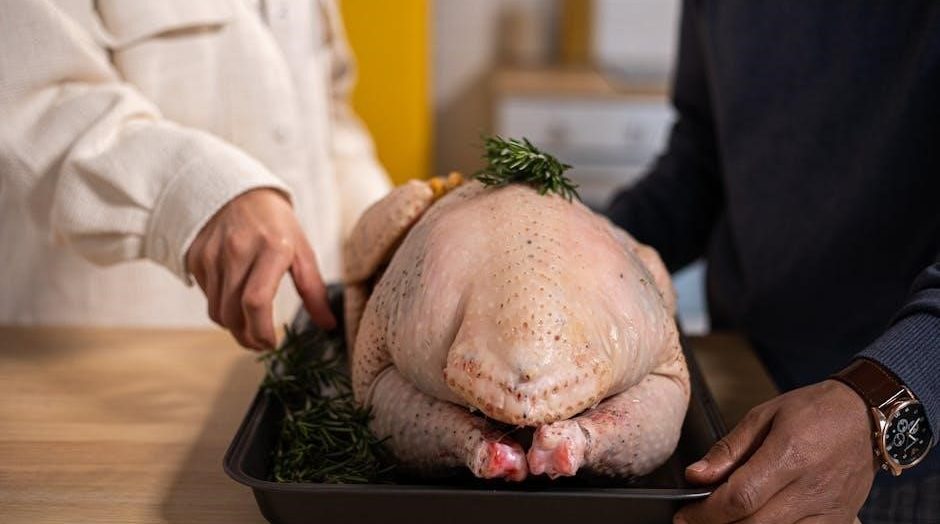
Proper turkey preparation is paramount for a safe and delicious result. Begin by ensuring the turkey is completely thawed, utilizing safe thawing methods at temperatures between 35-40°F (1.6-4.4°C). Once thawed, thoroughly rinse the turkey, both externally and within all cavities, using warm water or a soaking method to remove any residual ice crystals or debris.
Complete drying is crucial; excess water can cause dangerous splattering when the turkey enters the hot oil. Consider seasoning options – the Butterball Seasoning Kit is available by calling 1-800-489-1581 – to enhance flavor.
Rinsing and Drying the Turkey
Thorough rinsing and drying are critical safety steps before frying. Begin by rinsing the turkey inside and out with warm water. Pay close attention to the cavities, ensuring all ice crystals and remnants are removed. This process helps eliminate potential hazards caused by water reacting with the hot oil.
Following rinsing, meticulously dry the turkey with paper towels, both externally and within the cavities. Any remaining moisture can lead to dangerous splattering and uneven cooking. A completely dry turkey is essential for a safe and successful frying experience.
Seasoning Options (Butterball Seasoning Kit ─ 1-800-489-1581)
Enhance your turkey’s flavor with a variety of seasoning options. While you can use your favorite blend, Butterball offers a specialized seasoning kit designed for deep-fried turkeys. This kit is readily available and can be ordered directly by calling 1-800-489-1581.
Ensure the seasoning is applied both under and over the skin for maximum flavor penetration. Rub the seasoning generously, covering the entire surface of the turkey. Remember to avoid getting seasoning inside the turkey cavity, as it won’t contribute significantly to the taste.
The Frying Process
Begin by setting the fryer to the correct temperature and maintaining it consistently throughout the cooking process; do not reduce the temperature.
Setting the Temperature
Establishing the correct temperature is crucial for safe and delicious results when using your Masterbuilt Butterball electric turkey fryer. The operation manual emphasizes maintaining a consistent temperature throughout the entire frying process; do not reduce the temperature at any point during cooking. This ensures the turkey cooks evenly and reaches a safe internal temperature.
While specific temperature settings may vary slightly depending on the model, generally, the fryer should be preheated to the recommended temperature before introducing the turkey. Carefully monitor the temperature gauge to ensure it remains stable. Consistent heat is vital for proper cooking and preventing undercooked or overcooked areas. Remember to always prioritize safety and follow the guidelines outlined in your fryer’s manual.
Maintaining Consistent Temperature (Do Not Reduce)
A critical safety instruction detailed in the Masterbuilt Butterball electric turkey fryer manual is to never reduce the temperature once the turkey is submerged in the hot oil. Lowering the temperature can lead to inconsistent cooking, potentially resulting in an undercooked turkey, which poses a health risk. Maintaining a stable, high temperature ensures the turkey cooks thoroughly and quickly.
The fryer is designed to maintain the set temperature automatically. Fluctuations can occur briefly when the turkey is initially lowered, but the unit should recover quickly. Avoid making adjustments; allow the fryer to regulate itself. Consistent heat is paramount for achieving a crispy exterior and a safely cooked interior. Always adhere to this vital safety precaution.
Lowering and Raising the Turkey Basket
The Masterbuilt Butterball electric turkey fryer manual emphasizes slow and controlled movement when lowering and raising the turkey basket into and out of the hot oil. This is a crucial safety step to prevent oil spillage and potential burns. Lower the basket gradually, ensuring the turkey enters the oil smoothly and without splashing.
When raising the turkey, lift the basket steadily and vertically. Avoid jerky motions or sudden movements. The manual specifically instructs to lift the basket free of the oil slowly. This minimizes the risk of oil splattering and allows excess oil to drain back into the fryer. Always use appropriate heat-resistant gloves or mitts during this process for added protection.
Slow and Controlled Basket Movement
The Masterbuilt Butterball fryer manual repeatedly stresses the importance of slow and controlled basket movement for safe operation. Rapidly lowering a turkey into hot oil can cause dangerous splattering, potentially leading to severe burns. Similarly, quickly raising the basket can result in oil overflow and a hazardous situation.
Maintain a deliberate pace throughout the entire process. Lower the basket gradually, observing how the oil reacts. If excessive bubbling occurs, pause and allow it to subside before continuing. When lifting, raise the basket steadily, allowing oil to drain back into the pot. This careful approach minimizes risks and ensures a successful fry. Prioritize safety by adhering to these guidelines.
Monitoring Cooking Progress
Accurate temperature monitoring is crucial for safely and effectively frying your turkey with the Masterbuilt Butterball fryer. The manual emphasizes using a thermometer to check the internal temperature of the turkey, inserting it into the deepest part of the thigh – avoiding bone contact for an accurate reading.
Consistent temperature maintenance is vital; do not reduce the set temperature during the cooking process. Aim for a final internal temperature of 165°F (74°C) to ensure the turkey is fully cooked and safe for consumption. Regularly check the temperature throughout the frying duration, typically around 3-4 minutes per pound, but always verify with a thermometer.
Using a Thermometer (Deepest Part of Turkey)
Employing a thermometer is paramount to guarantee your turkey reaches a safe internal temperature during frying. Insert the thermometer into the deepest section of the turkey’s thigh, ensuring it doesn’t touch any bone, as this can yield an inaccurate reading. This area cooks the slowest, providing the most reliable indication of overall doneness.
Regularly monitor the temperature throughout the frying process. The target internal temperature is 165°F (74°C). Consistent monitoring, combined with maintaining the fryer’s set temperature, ensures a perfectly cooked and safe-to-eat turkey. Avoid relying solely on cooking time; always verify with a thermometer for optimal results.
Post-Frying Procedures
After frying, carefully remove the turkey, allow the oil to cool completely, and then follow proper cleaning and storage instructions for longevity.
Removing the Turkey from the Fryer
Carefully lift the turkey basket from the hot oil, ensuring a slow and controlled movement to prevent spills or splatters. The turkey should be positioned vertically, with the breast side facing upwards during removal. Exercise extreme caution as both the turkey and the basket will be exceptionally hot.
Avoid any sudden jerking motions that could destabilize the basket and cause hot oil to splash. Once clear of the oil, gently place the turkey onto a large, heat-resistant surface, such as a roasting pan lined with paper towels, to absorb any excess oil. Allow the turkey to rest for at least 20-30 minutes before carving, as this allows the juices to redistribute, resulting in a more tender and flavorful bird.
Draining and Cooling the Oil
Allow the oil to cool completely before attempting to drain it from the fryer. This is a crucial safety step to prevent severe burns. Cooling can take several hours, so plan accordingly. Once cooled, carefully pour the oil into a sturdy, sealable container, such as the original oil container or a designated waste oil receptacle.
Never pour used cooking oil down the drain, as it can cause significant plumbing problems and environmental damage. Dispose of the cooled oil responsibly at a designated recycling center or according to local regulations. Thoroughly clean the fryer pot and basket after draining the oil, ensuring all residue is removed.
Cleaning and Maintenance
After each use, ensure the fryer is completely cool and unplugged before cleaning. Remove the oil and thoroughly wash the pot, basket, and any other detachable parts with warm, soapy water. Avoid abrasive cleaners that could damage the fryer’s surface. Inspect the power cord for any damage; if found, do not use the fryer.
Proper cleaning extends the life of your fryer. Wipe down the exterior with a damp cloth. Store the fryer in a cool, dry place, protected from the elements. Regularly check for any signs of damage and contact Masterbuilt if issues arise.
Proper Cleaning Procedures
Always begin by ensuring the fryer is completely cooled and disconnected from the power source. Carefully drain the used oil, allowing it to cool completely before disposal – never pour hot oil down the drain. Remove the turkey basket and pot, washing them thoroughly with hot, soapy water. A soft sponge or cloth is recommended to avoid scratching.
Inspect the heating element for any oil residue and gently wipe clean. The exterior of the fryer can be cleaned with a damp cloth. Avoid immersing the electrical components in water. Ensure all parts are completely dry before reassembling and storing the fryer.
Storage Instructions
Before storing your Masterbuilt Butterball electric turkey fryer, ensure all components are completely clean and dry. Store the unit in a cool, dry location, protected from the elements and extreme temperatures. It’s advisable to store the fryer in its original packaging, if available, to prevent damage.
Keep the power cord neatly coiled and secured to prevent tripping hazards. Avoid placing heavy objects on top of the fryer during storage, as this could damage the heating element or other components. Regularly inspect the unit for any signs of damage before each use. Proper storage extends the lifespan of your fryer.